
Lomorama Double Rehouse
An improvement of the original Iscorama Rehouse VII by Van Diemen.
Short History of the Iscorama Anamorphic Attachment
The base lens of this double rehouse is an Iscorama 36 SC.
This lens is an anamorphic attachment adapter with a 1.5× squeeze (1.42× effective).
For its time, it featured a unique single-focus system using two close-up lenses (diopters), one of which is moving. The Iscorama was manufactured from the 1960s to the 1990s in several variations.
The version with the most iconic look is the one I used frequently on various commercials and short films. It offers beautiful optical characteristics, including veiling glare and horizontal, amber-colored (or light-source-colored) flares.Despite their gorgeous image, Iscorama lenses suffer from limitations in their mechanical construction. They were originally designed for photographic widescreen slide shows, as the attachment could also be used for projection (desqueezing).

Short History of Iscorama Rehousings
Van Diemen was the first – and to date the only – company to initiate a rehousing project, driven by high demand at the beginning of the 21st century.
1. Modification by Van Diemen
(1.2 m close focus)The first rehouse was relatively simple and focused on providing a more robust housing, replacing the original plastic casing.
The minimum focusing distance was improved from 2 m to 1.2 m. However, the front still rotated and protruded during focusing.2. Modification by Van Diemen
(0.9 m close focus)The second rehousing stage addressed the rotating front. While Van Diemen managed to design a non-rotating mechanism, the front element still protruded. In addition, the front element began to wobble at close focus distances.
Overall, I was never fully satisfied with this design. It was based on a helicoid mechanism rather than a cam-driven lens movement, which ultimately seemed to mark the end of further improvements.
Van Diemen later customized the design for me by adding:
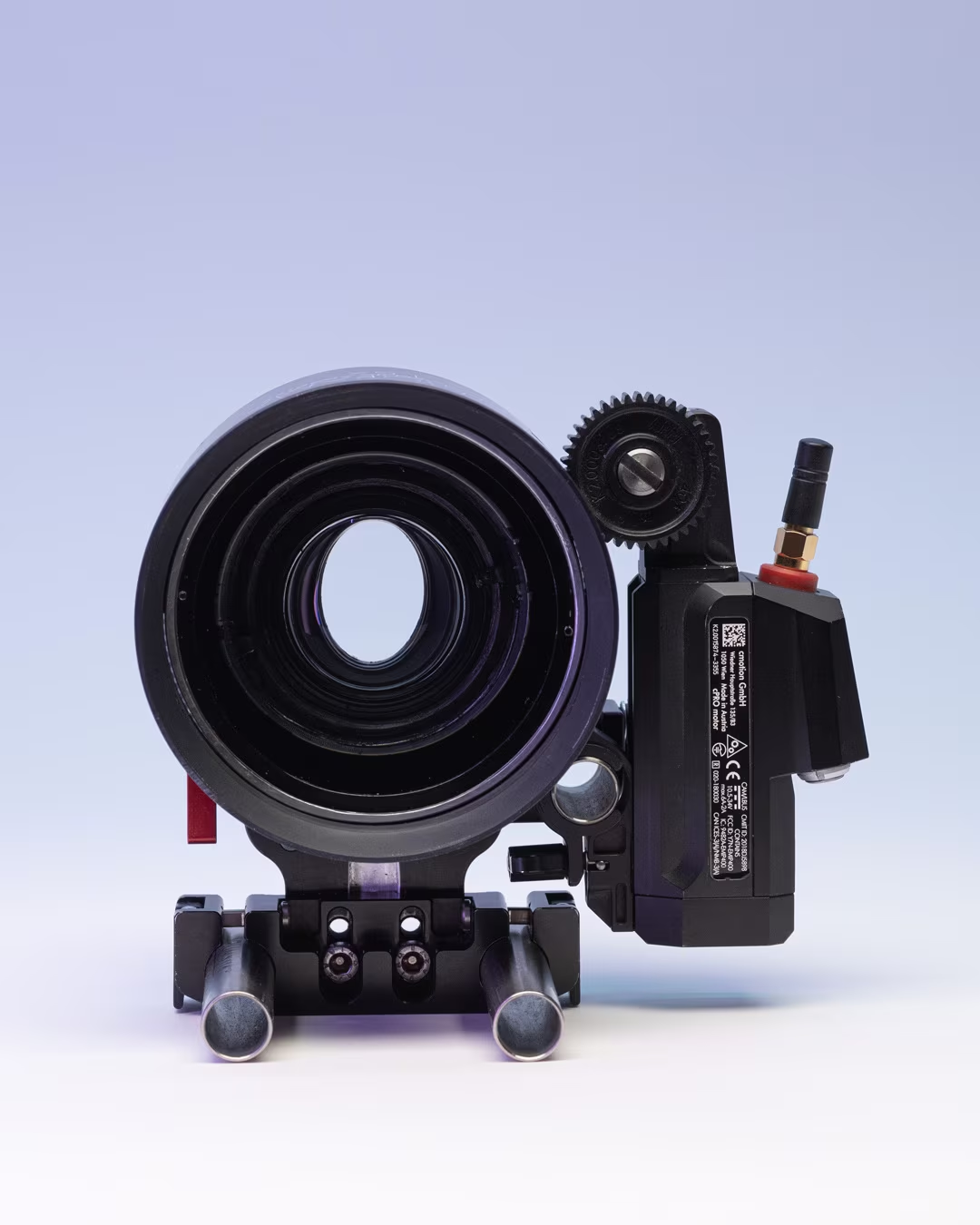
• a directly attached Vocas 15 mm support for fast taking-lens swaps
• a 15 mm bracket mounted to the Iscorama for rigid lens-motor mounting
This setup allows the anamorphic attachment to remain calibrated when changing the taking lens.Enhanced Optics
The protruding front element continued to bother me, and I always felt that the full potential of this lens had not yet been realized. This led me to dive deeper into the world of anamorphic lenses and diopter/close-up focusing systems.
After experimenting with many different taking lenses – as is common when working with the Iscorama – I eventually found the perfect lens family: the LOMO Standard Speeds. From that point on, I began performing simple rehousings for them as well.
Finally, I developed a special sleeve that attaches directly to the housing and replaced the front glass element of the Iscorama with a larger one from a wide-angle adapter, which I found after countless attempts.
Key Specs
- Non-rotating, non-protruding 100 mm front
- Further improved minimum focusing distance: 0.9 m
- Direct attachment of a Fujinon WA 0.8× adapter (0.75 m close focus)
- Wider field of view due to the new front element
- Less vignetting on wide-angle lenses and during close focusing, thanks to the larger front element
- Full LOMO Standard (PL-mount) lens family supported as taking lenses:
- 32 mm (with WA attached), 40 mm, 50 mm, 75 mm, 100 mm
Taking Lenses
LOMO 40 mm OKC1-40-1 f/2.5
LOMO 50 mm OKC1-50-1 f/2.0
LOMO 75 mm OKC1-75-1 f/2.0
LOMO 100 mm OKC1-100-1 f/2.0Wide-Angle Attachment
Fujinon 0.8× WCV-100C

Sensor Coverage & Workflow
The Lomorama and its taking-lens family are optimized for a 3:2 open-gate sensor, such as the one found in the ARRI Alexa Mini.
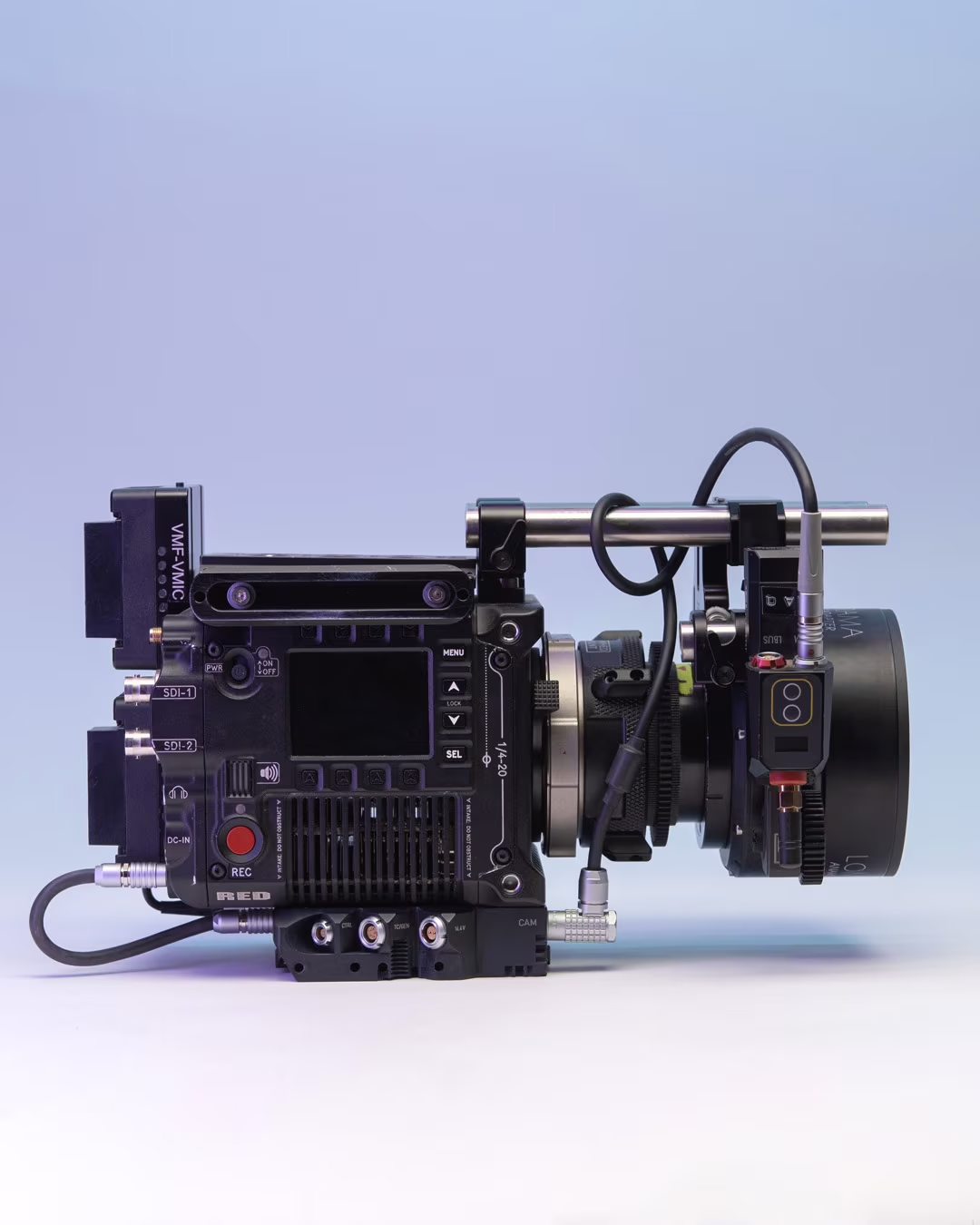
I use this lens combination on my RED V-Raptor in 7K 3:2, which features the same sensor size.
The extended headroom of this aspect ratio is ideal for reframing or, even better, for correcting lens distortion, which further enhances the effective field of view.
The wide-angle adapter and matte box are quick and easy to assemble.
The follow-focus motor remains permanently attached to the anamorphic front when changing the taking lens. No horizontal alignment or motor recalibration is required after a lens swap.